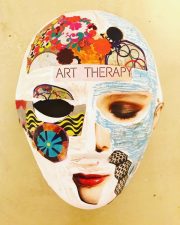
“The aim of art is to represent not the outward appearance of things, but their inward significance”– Aristotle (384–322 BC)
Art therapy is often misunderstood as something meant only for those in distress. In reality, it supports a wide spectrum of emotional and developmental needs. It can be a space to express joy, curiosity, and personal insight, as well as to process grief, loss, and complex feelings. It also nurtures skills such as focus, coordination, and sensory awareness. Because of its versatility, art therapy is practiced in schools, hospitals, private settings, senior communities, and beyond. In my work, I have seen how naturally people of all ages—children, adults, and seniors—respond to the creative process as a way of connecting with themselves. I invite each person to make choices that feel right to them, whether it’s the medium, the paper size, or the direction of the work. This sense of agency is an important part of the process. We use the act of creating to explore, problem-solve, and reflect. Rather than interpreting the artwork for someone, I support the person in discovering their own meaning within what they’ve created. Together, we set intentions and gently shape the process to stay aligned with their goals. Art can be a place to slow down, to listen inward, and to express what may be difficult to put into words. It becomes a dialogue—not just with the outside world, but with oneself.
“It is magical to see how art can make you feel. Doing art makes me feel better.” – A participant in an Art Therapy workshop.
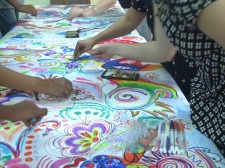
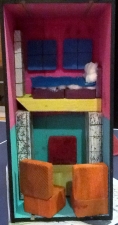
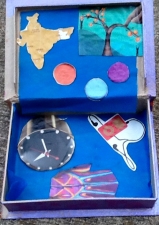
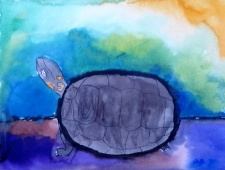
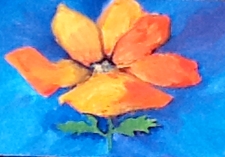
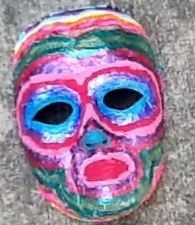
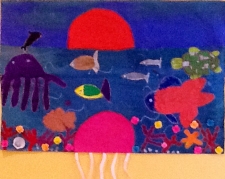
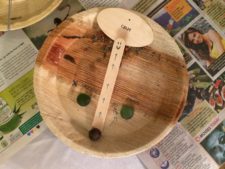
Pictures from the individual art therapy and art expression groups.